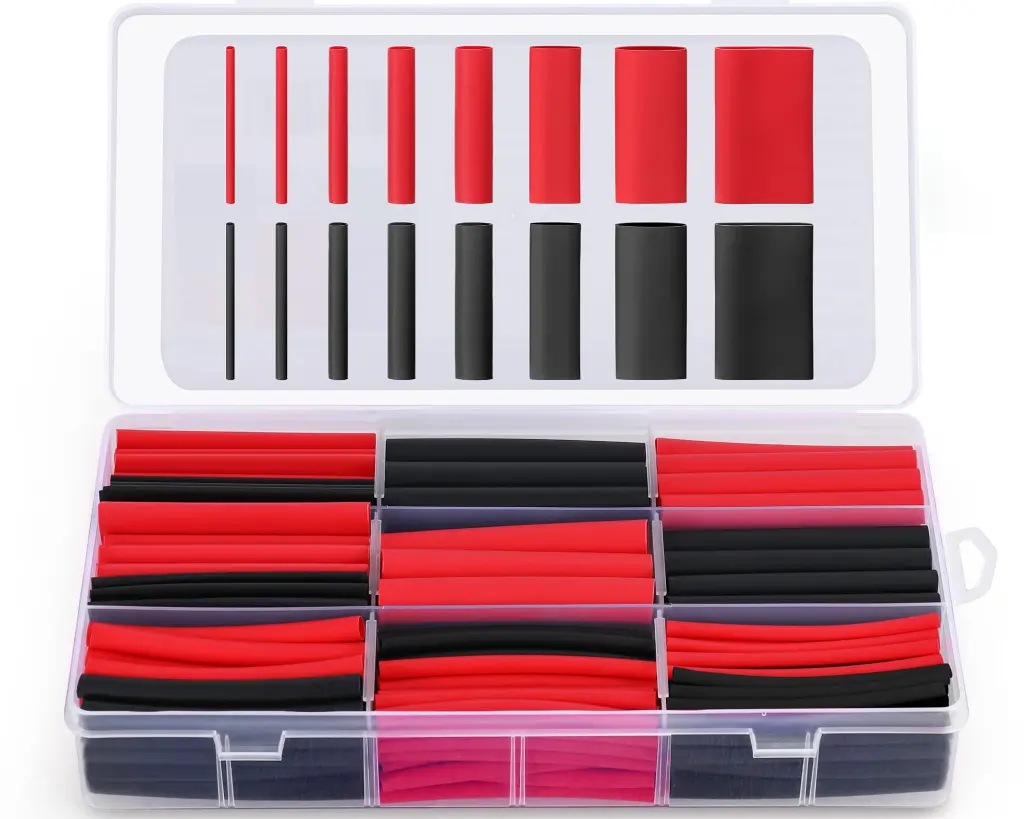
In the world of electrical systems, proper protection of cables and connections is essential to ensure performance and safety. One of the key elements for achieving this is heat shrink insulation, an effective and versatile solution used in a wide range of industries. In this article, you will discover what heat shrink insulation is, its main applications, and how to choose the most suitable option according to your needs.
What Is Heat Shrink Insulation?
Heat shrink insulation is a type of flexible tubing that shrinks when heat is applied, adapting to the object it covers. It is made from plastic polymers capable of reducing their size when exposed to heat, creating a tight and durable insulation layer. This material is particularly useful for protecting electrical cables and connections, as it provides a resistant barrier against environmental factors such as moisture, dust, and other contaminants.
One of the main advantages of heat shrink insulation is its ability to create a protective layer that not only provides effective insulation but also reinforces the mechanical resistance of cables and connections. Its use is common in industries such as automotive, electronics, telecommunications, and electrical engineering.
How Does Heat Shrink Insulation Work?
The operation of heat shrink insulation is based on a physical property known as “shape memory.” The heat shrink tube or sleeve is previously expanded during the manufacturing process, and when heat is applied, it returns to its original shape, fitting tightly around the object it is covering. This process is simple and only requires a heat source, such as an industrial dryer or a heat gun.
The shrink ratio varies depending on the material and design. It is important to select the correct size to ensure that, once heat is applied, the tube shrinks enough to form a secure fit without being too tight or too loose.
Applications of Heat Shrink Insulation
Heat shrink insulation has multiple applications in both industrial and domestic environments. Below are some of its most common uses:
1. Protection of Electrical Cables
One of the most common applications of heat shrink insulation is the protection of electrical cables. As it shrinks, the insulation forms a protective layer around the cable, shielding it from abrasion, moisture, and other environmental factors that could damage it. This is particularly important in exposed environments or in electrical installations that must withstand harsh conditions.
2. Cable Repair
The use of heat shrink insulation is also ideal for repairing damaged cables. Instead of replacing the entire cable, you can apply a heat shrink sleeve over the damaged section to restore its functionality and protect it from future damage. This is especially useful for hard-to-access cables or those with high replacement costs.
3. Insulation of Electrical Connections
In many electrical installations, cable connections require additional protection to prevent short circuits or current leakage. Heat shrink insulation provides secure insulation that prevents accidental contact between conductors and protects connections against mechanical wear.
4. Protection of Connectors and Terminals
Connectors and terminals are vulnerable points in any electrical system. Using heat shrink insulation around these components can provide an additional protective barrier, ensuring they are not exposed to corrosive agents or extreme environmental conditions.
5. Applications in Automotive and Electronics
Heat shrink insulation is widely used in the automotive and electronics industries for the protection of cable harnesses and delicate components. Its ability to shrink precisely around small components makes it an ideal choice for applications requiring robust yet compact protection.
Benefits of Heat Shrink Insulation
Heat shrink insulation offers numerous benefits across a wide range of applications:
- Resistance to environmental factors: Provides protection against moisture, dust, abrasion, and chemicals, ensuring cables and connections remain in optimal condition.
- Durability: Once applied, heat shrink insulation forms a strong and durable barrier, extending the lifespan of cables and electrical components.
- Ease of use: No complex tools are required for installation. A heat source is all that is needed for the material to shrink and form the desired fit.
- Versatility: Available in different sizes, thicknesses, and materials, making it suitable for a wide variety of uses and environments.
How to Choose the Best Heat Shrink Insulation
To select the best heat shrink insulation for your projects, it is important to consider several factors:
- Tube size: Choose a tube size slightly larger than the diameter of the cable or component you want to cover. The tube will shrink to fit tightly.
- Shrink ratio: This ratio indicates how much the tube will shrink when heat is applied. A common ratio is 2:1, meaning the tube will shrink to half its original size. However, other ratios such as 3:1 or 4:1 may be more suitable for certain applications.
- Operating temperature: Ensure the insulation you choose can withstand the temperatures to which the cables or components will be exposed.
- Tube material: Heat shrink tubes are made from different materials such as polyolefin, fluoropolymer, and PVC. Each offers different properties in terms of temperature resistance, flexibility, and chemical protection.
Heat shrink insulation is an effective and versatile solution for protecting cables, connections, and electrical components. Its ease of use, combined with its durability and resistance to environmental conditions, makes it an essential option in any electrical installation, whether industrial or domestic.
At JST, we specialize in high-quality connector and terminal solutions for the electrical and electronics industry, helping optimize electrical projects with innovative products.