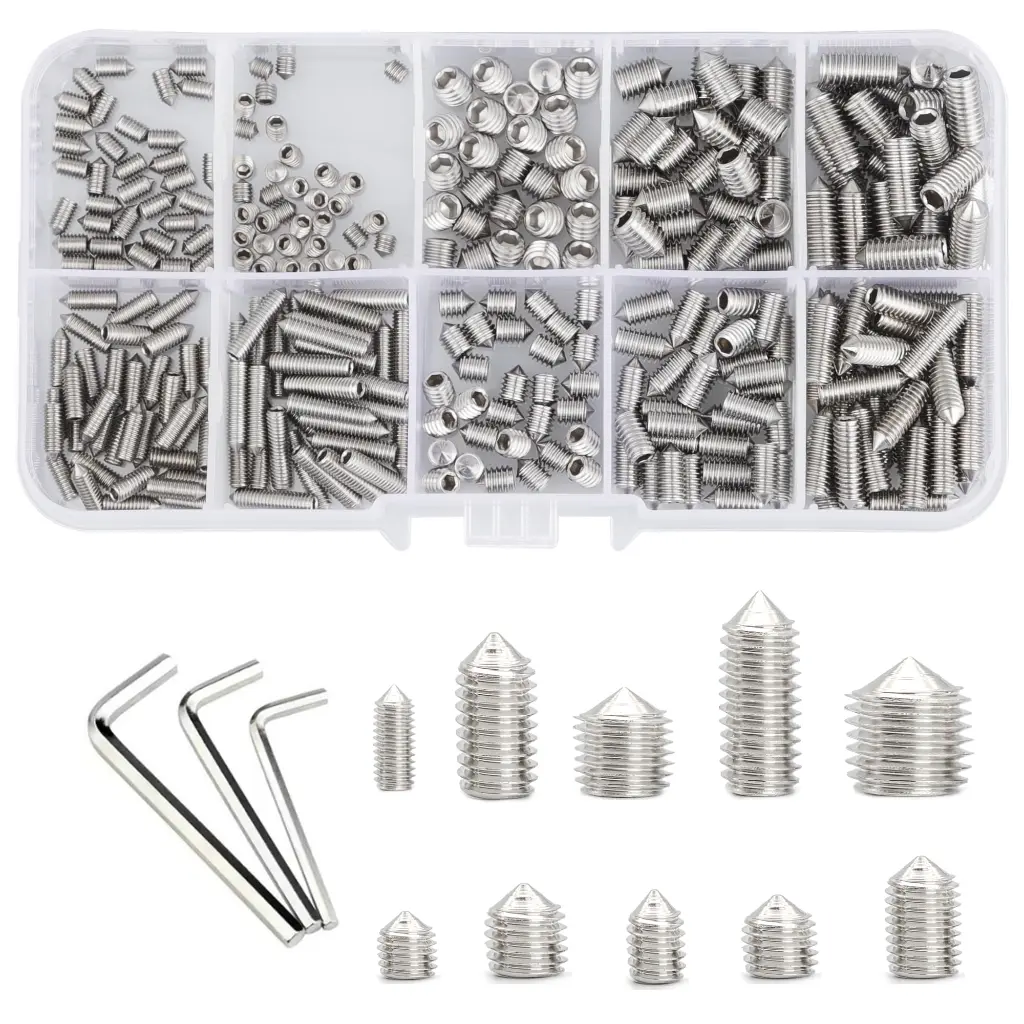
Set screws are essential components in the world of engineering and electricity, widely used to secure parts without the need for an additional nut. In this article, we will explain what a set screw is, its common uses, and its importance in connecting electrical systems, such as JST connectors.
What Is a Set Screw?
A set screw is a type of headless screw designed to be threaded into a hole to hold two components in place. Unlike conventional screws, the outer end of a set screw is flat, allowing it to remain hidden inside the part where it is inserted, providing a cleaner and more compact appearance.
Types of Set Screws
- Cone Point Set Screw: Ideal for temporary fastening.
- Flat Point Set Screw: Perfect for flat surfaces.
- Cup Point Set Screw: Used in high-pressure applications.
How Is a Set Screw Used?
This type of screw is inserted into threaded holes to hold parts in place without adding extra weight or volume. In electronic applications, set screws are crucial for securing small components and preventing unwanted movement, something especially important in JST connectors.
Advantages of Set Screws in Electrical Connectors
- Secure Connections: Set screws provide firm and secure connections, reducing the risk of disconnections.
- Vibration Reduction: By securing components, they minimize movement in high-vibration equipment.
- Compatibility: They are compatible with a wide variety of materials, from metals to heat-resistant plastics.
Set Screws in JST Connectors
JST connectors are essential in electronic applications, and the use of set screws ensures a stable and durable connection. These connectors are widely used in circuits, drones, and electrical devices where strong connections are required.
The use of set screws in JST connectors helps maintain reliable connections in high-vibration environments such as drones and electric vehicles, where secure connections are critical.
Tips for Choosing the Right Set Screw
- Material: Make sure the screw material is compatible with the environment in which it will be used.
- Length and Size: A screw that is too long may be counterproductive.
- Connector Compatibility: Some connectors require specific set screw sizes to function optimally.